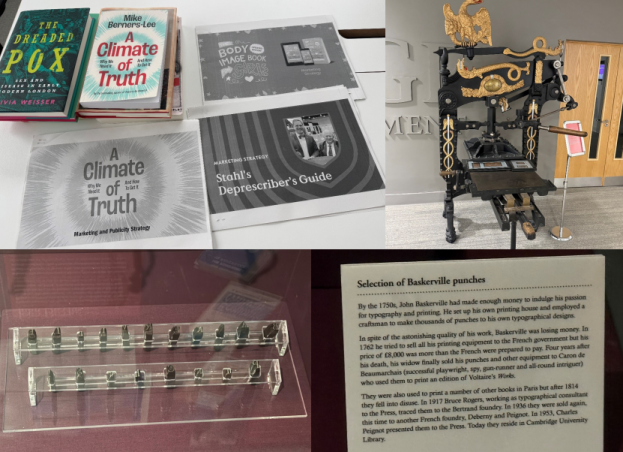
Welcome to a unique edition of the Diary of a Young Writer blog. This month features my own photos taken on a fantastic trip to Cambridge University Press in May. I was fortunate to be invited by a staff member at the press, who I first met on my undergraduate degree and who inspired my pathway of wanting to go into publishing. For students and young writers, I encourage you to chat with people in the industries you want to go into- a valuable piece of advice as a young writer I have received is to network and build up contacts. That is how this great opportunity came about.
I was in Cambridge for three days and had the chance to meet with a range of colleagues at the press, from a Senior Editor, Senior Production Manager to the Marketing Manager and a colleague within marketing. I learned so much about a company that has a high respect within the academic publishing sector.
I hope to go into marketing and as you can see in my photo, I was thankful to learn about a current marketing strategy and see the books that are fresh in the shops. These fall in the trade (for the general public) side of what the press do. It was fascinating to hear about the process after learning about it on my master’s degree. The way the strategy reaches out to external press is excellent. Everything runs to a timeline and can extend up to two years before the book is published. Each member of marketing has put many hours into the book they have overseen.
I was then delighted to have a tour of the museum. It is remarkable to see the living history of the presses, because older staff and retirees can well remember when the presses were used and the business was much more manual and less digital. Each press would use a communication process to print sections of a page of text and the initial machine in the process looks like a giant typewriter. I was astonished at how farsighted the designers of these press machines were and how long they lasted. Some were still going into the 1980s.
The text you can see about the printer John Baskerville is a great story within the industry. Baskerville created the punches, which were pieces of metal chiselled with a letter on the end. It was a big step forward because they could be made in different font sizes and in lower- and upper-case letters. After Baskerville died, his widow sold them to someone in France and it took nearly 200 years for them to be returned to Cambridge in 1953. My guide told me that some of the punches are in Birmingham university, because Baskerville was from there, and one letter is the size of a needle point- can you imagine the precision!
I feel truly fortunate to have seen both the historical and very latest modern aspects of a respected publishing company. It has been a very informative chance to ask questions to different people across the company and understand how far the industry has moved from 50 years ago. Even in the last 10 years there has been an acceleration away from paper manuscripts to a much more digital based and online priority working. I am reassured that print books and exam papers will not be getting phased out anytime soon- there is still a vast amount of love and need for paper copies.
One more thing I thought was great was the way Cambridge University Press are working much more on print on demand for copies of physical books. This is reducing the need to have a print run and the cost, space limitations and environmental knock-on effect of having multiple copies waiting in storage. I commend the way the press are leading the way in reducing waste and cultivating more tailored service for each customer as they want the book. I have found my visit highly enjoyable and if you get the chance as a young writer to see a place of work you hope to go into, do take the chance. It opens your eyes to how real world working happens and having the chance to ask questions is so valuable.